MaineECO’s Outdoor Gear Guide
Outdoor education gives young children something no indoor classroom can: unstructured time to explore, take appropriate risks, and build a relationship with the natural world. But that relationship can only grow if children are actually comfortable enough to stay outside. A child who is cold or wet in the wrong gear disengages fast. Quality outerwear isn't a nice-to-have for early learning programs; it's the foundation that makes extended outdoor time possible at all.
Early learners need time to play, explore, and interact with nature in ways that are joyful and meaningful to them, and quality gear that enhances that time outside is imperative to a children’s experience in nature. MaineECO offers a gear and layering break-down for early childhood educators to keep their classes warm, dry, and outside longer, organized by season so you can set clear, simple expectations for families.
MaineECO also offers a Mini Gear Grant, that provides funding to early education centers to outfit entire classrooms with outdoor gear. We recognize that purchasing quality gear isn’t always financially accessible for all centers or individual families. Many children in Maine face a “nature gap” - limited access to outdoor experiences due to socioeconomic, geographic, or systemic barriers - MaineECO’s Mini Gear Grant aims to provide equitable access to gear so all children can benefit from outdoor learning. All licensed childcare centers are welcome to apply, and more information can be found by visiting maineeco.org/gear-grant.
What Makes Good Outdoor Gear?
The right outerwear should keep kids warm, dry, and mobile, while still being easy enough for a child to put on and take off independently. The three golden rules:
Layer, don't bulk up. Several light layers beat one heavy coat, and layers let kids adjust to activity level and changing weather.
Skip the cotton. It soaks up moisture and stops insulating once wet.
Expect gear to get dirty. Dress for a child who's going to get dirty; that's the whole point of outdoor play.
Gearing Up for the Seasons
-
Sun and bug protection take priority in warm weather:
Long-sleeved, full-length sun- and insect-protective clothing (rash guard "swim shirts" and "swim tights" work great).
SPF-treated fabric (like Rit Sunguard) paired with permethrin covers both sun and insect protection without needing heavy sunscreen or repellent.
Tick Resource Guide: https://www.maineeco.org/resources/tick-safety-in-maine
-
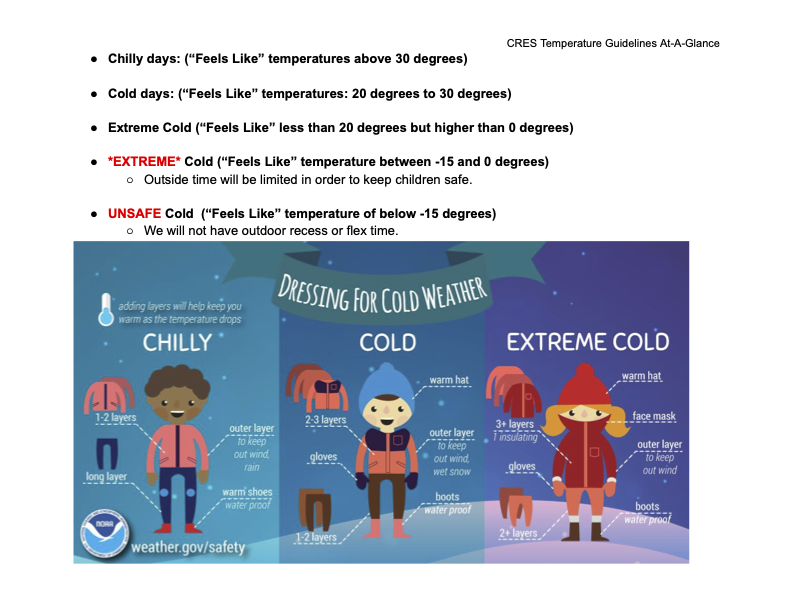
Temperatures swing wildly in shoulder seasons, so layering is everything.
Waterproof rain gear is non-negotiable — rain pants, rain jacket (or a one-piece rain suit).
Waterproof boots — insulated options like Bogs or Muck boots work well with lightweight socks.
-
Winter is where quality gear really pays off. Here's the full head-to-toe breakdown:
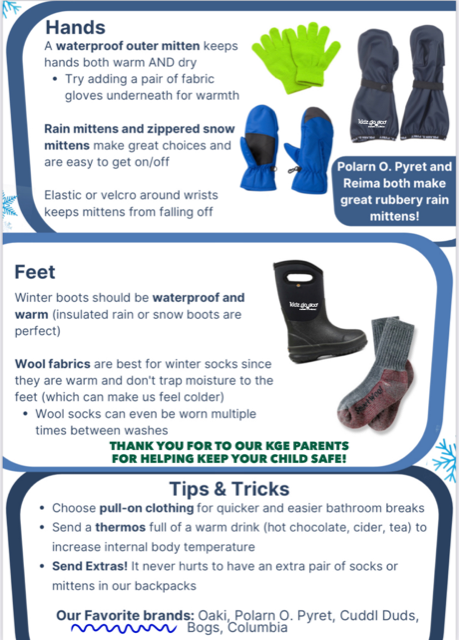
Boots & Socks
Insulated, waterproof boots + one pair of thin wool socks (skip double-layering socks - too much bulk actually makes feet colder)
A fleece or sherpa insole adds extra warmth.
If feet get cold, size up sock thickness rather than adding a second pair.
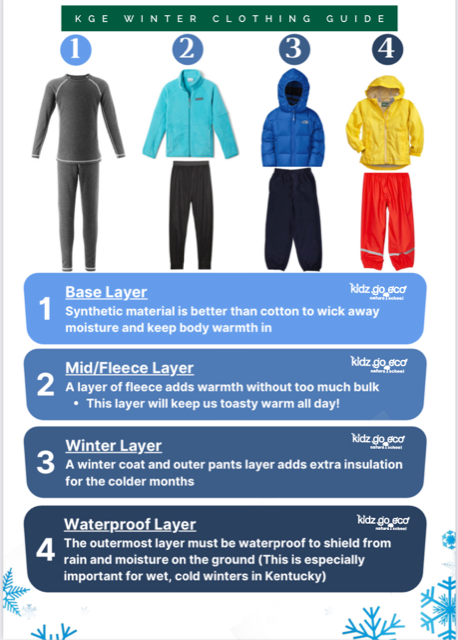
Base Layer
Merino wool, silk, or polypropylene long underwear (top and bottom) - never cotton.
Mid Layer
Long-sleeve wool or fleece top, plus fleece pants or sweatpants.
Outer Layer
Insulated, waterproof jacket with a hood.
Insulated, waterproof snow pants (a quality snowsuit or separate jacket/pants combo).
Waterproof mittens that cover the wrist and forearm.
Fleece or wool hat, plus a balaclava or neck warmer.
Pro tip: Avoid single-piece snowsuits for potty independence. Waist-length snow pants with suspenders or bib overalls make bathroom breaks far easier.
Where to Shop for New & Used Gear
Outdoor School Shop
MaineECO is honored to partner with Outdoor School Shop (OSS), a company making a tremendous impact in the field of education by improving access to high-quality outdoor gear for children and educators. OSS offers exclusive discount coupons to all Gear Mini Grant applicants, making it easier for programs and partners to equip their staff and children, whether or not they receive a grant.
We recommend you visit their site for all your gear needs.
Maine GearShare
MaineECO also partners with Maine GearShare (MGS) on an innovative early childhood gear rental pilot program. This collaboration aims to make high-quality outdoor gear more accessible to early childhood programs across the state by offering 9 month rentals for children and educators.
This program continually expands, reaching more programs and communities with the gear they need to get outside early and often no matter the weather. MaineGearShare also has additional gear rental programs for large groups, organizations, and classrooms. Learn more by visiting their site.
Other Gear Shopping Options
Budget-friendly options include LL Bean, REI, Sierra Trading Post, Oaki, Bogs, Helly Hansen, Puddlegear, and Patagonia's Worn Wear.
For secondhand deals, check Geartrade, The North Face Renewed, Facebook Marketplace, and local thrift stores like Goodwill or Savers.
Outdoor Gear FAQ’s
-
Rain suit:
Reliable zippers, durable fabric, neoprene cuffs; size up to fit over a snowsuit.Boots:
Tall, neoprene, waterproof (avoid felt-lined snow boots — they trap moisture and are hard for kids to manage).Jacket: Plain hood that fits under a rain hood; wide cuffs for mittens; fleece/polyester fill (not overly puffy).
Snow Pants:
Waist-length with suspenders or bib-style, for easy potty breaks.Mittens:
Waterproof, wrist/forearm coverage — skip knit mittens.Hat: Balaclava or form-fitting hat without 3-D decorations, which tend to block the hood.
-
For cold or wet weather, stick to polypropylene, fleece, silk, or wool. These fibers stay warm even when damp.
Cotton does the opposite. Once wet, it loses all insulating power and actually chills the body. It can actually make a child colder and increase the risk of hypothermia in cold weather.
However, cotton is totally fine for warm-weather T-shirts and pants.
-
Both, depending on the season — waterproof insulated boots (like Bogs) for winter, and waterproof rain boots for wet fall and spring days.
-
Just one pair of wool socks. Doubling up adds bulk that restricts circulation and can make feet feel colder, not warmer.