Loose Parts in Your ONB Practice
At MaineECO, we believe nature should never feel off-limits, and that great learning doesn’t require expensive materials. As a Maine resource for outdoor and play-based education, we help early educators, families, and childcare providers bring loose parts play into their programs with confidence. Whether you’re a new outdoor and nature-based (ONB) educator wondering what loose parts are, how to start a loose parts collection, or how to keep open-ended play safe, MaineECO offers educational expertise, educator support and resources make implementing outdoor curriculum into your classroom simple.
What Are Loose Parts?
Loose Parts can be anything when a child walks up to them. And that is the point.
Loose parts are found objects and materials that children can move, manipulate, control, and change while they play. With no set directions, they invite open-ended, imaginative play that supports brain development.
Almost anything can become a loose part, but these categories are especially helpful for building a loose parts collection in your early childhood classroom or program.
Natural Collections
Pinecones, acorns, seed pods, stones, shells, sticks, and feathers make wonderful natural loose parts for early learners. These items can be delicate or sturdy and work well both indoors and outdoors.
Larger Items for Outdoor Building
Non-pressure-treated wood boards and planks, tree limbs, tree stumps, gutters, PVC piping, hoses, lattice, wire spools, pallets, and buckets are ideal for large-scale outdoor construction. Choose sturdy pieces that are free of splinters and nails.
Recycled and Small Materials
Paper tubes, corks, jar lids, egg cartons, thread spools, cotton balls, nuts and bolts, buttons, yarn, wire, twine, fabric, and small boxes make great low-cost, sustainable loose parts. We try to avoid plastics where we can, but they sometimes make wonderful loose parts, and we’ll gladly take them.
Tools and Household Objects
Old frames (no glass), metal kitchen utensils, metal pots and pans, hammers, screwdrivers, metal pitchers and scoops, baskets, and mixing bowls encourage real-world exploration and problem-solving.
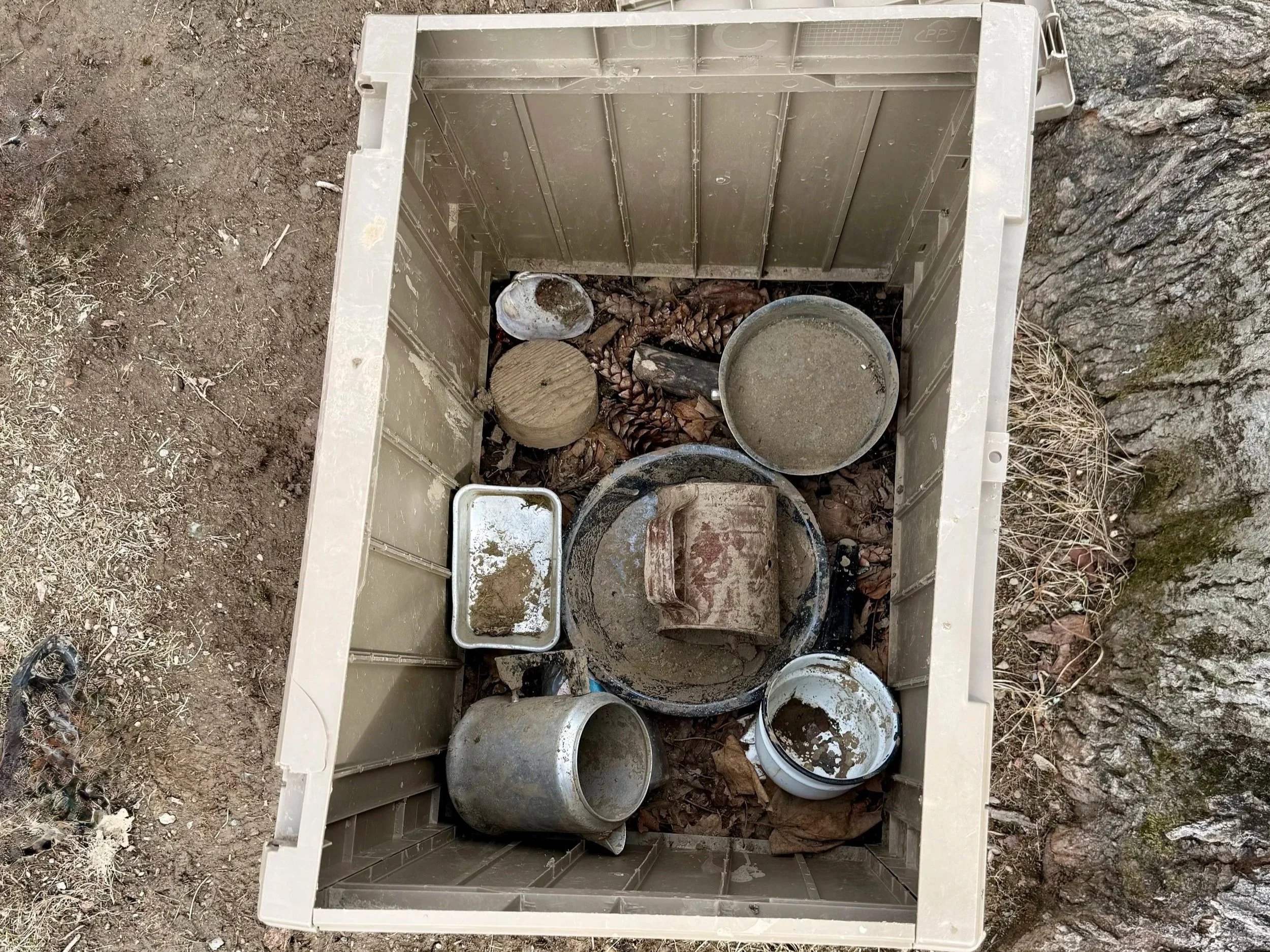
Loose Parts Box at Willow Tree Occupational Therapy and Enrichment Program in Corinth, ME
Why Loose Parts Play Matters in Early Childhood Education
Loose parts play builds creativity, fine and gross motor skills, math and science thinking, and cooperation. It’s also budget-friendly, since many of the best materials are found, donated, or repurposed, which makes it accessible to any early learning setting.